Developing spatial artworks with light, in which psychological interiors and physical exteriors flow into one another, Luisa Baldhuber creates multi-sensory installations, environments and glass objects in which space becomes an entanglement of the physical world, the Subconscious, digital image spheres and posthuman ecologies. The artist not only alters spatial experience but also heightens awareness of how we perceive and interpret the visible world.
glass
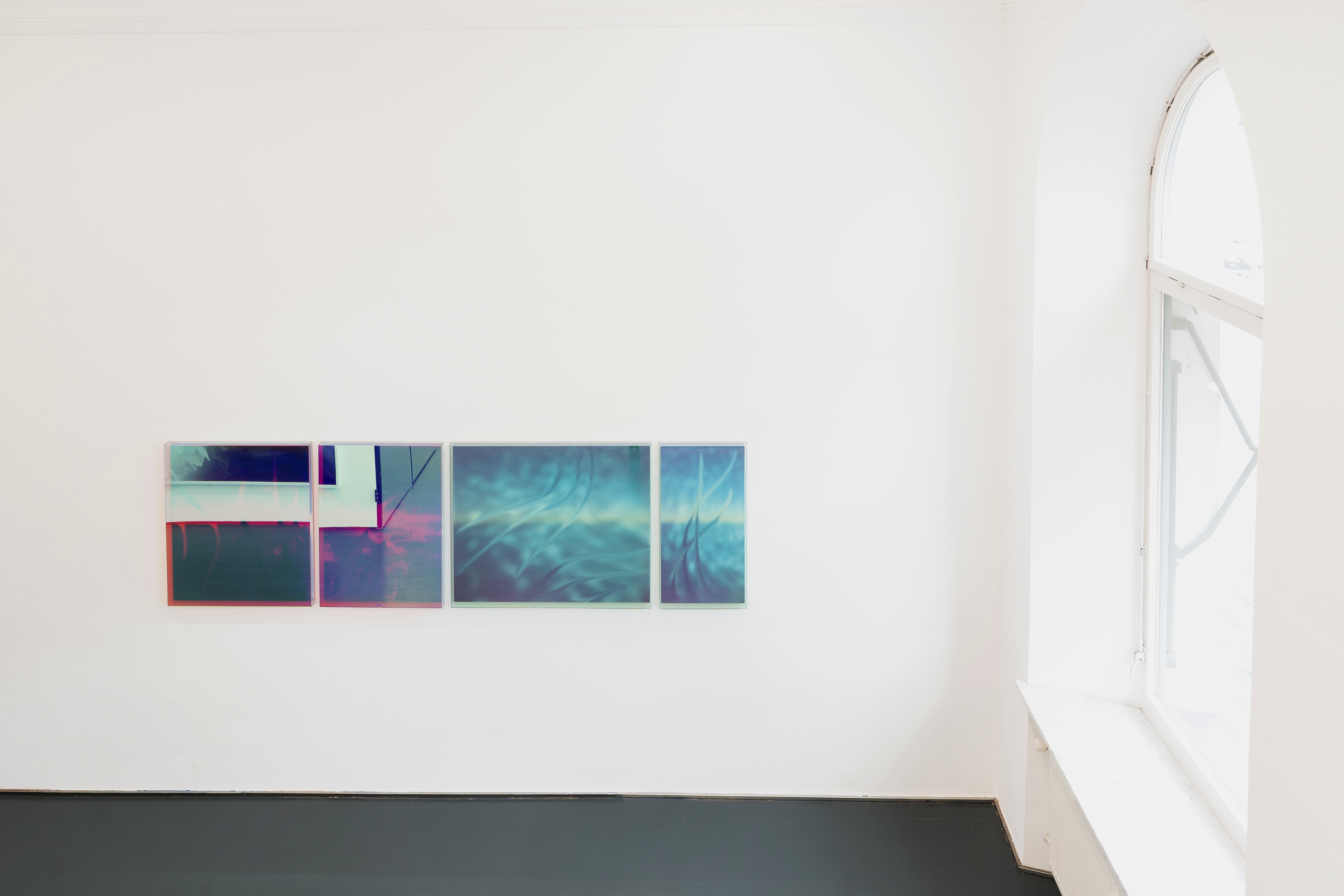
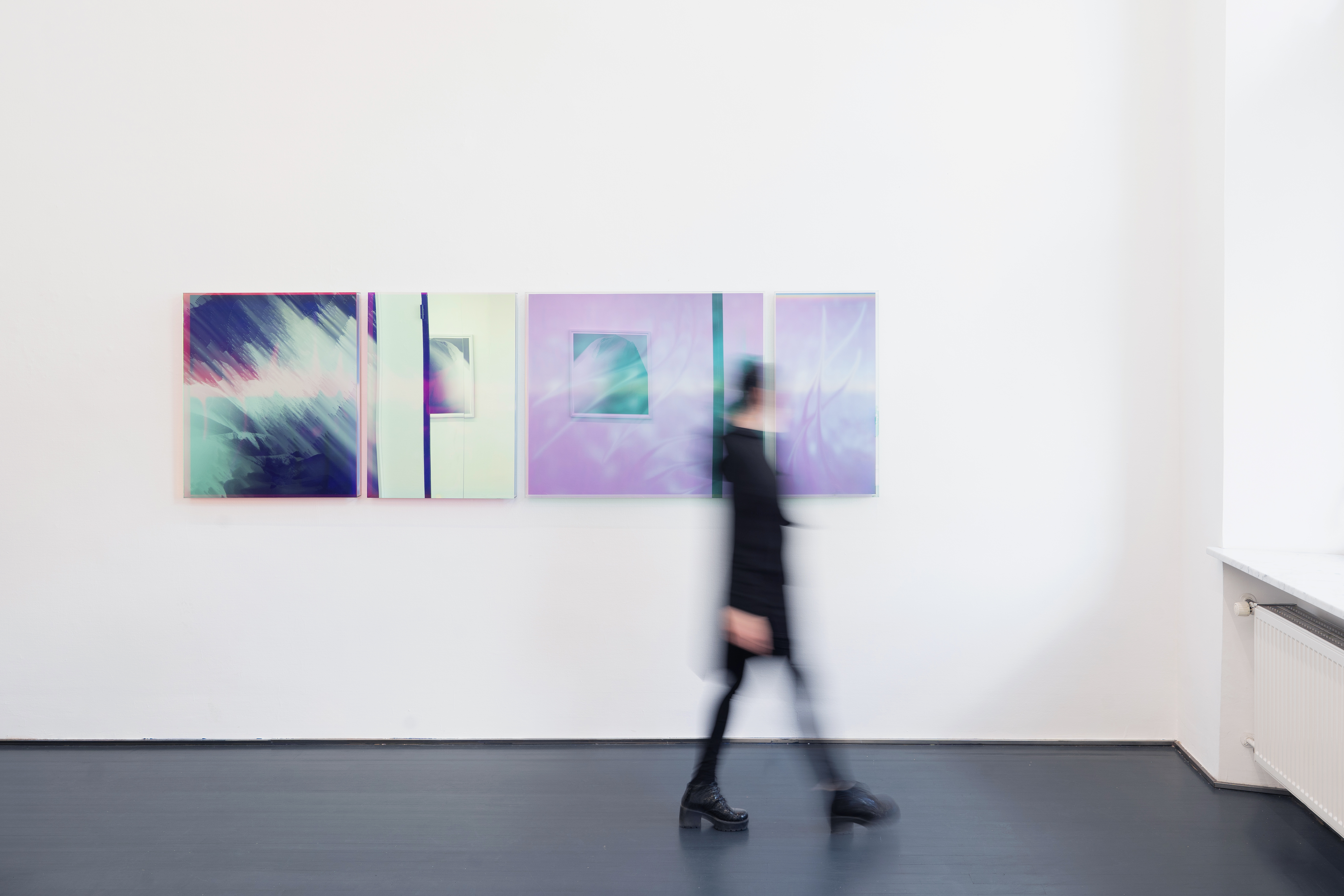
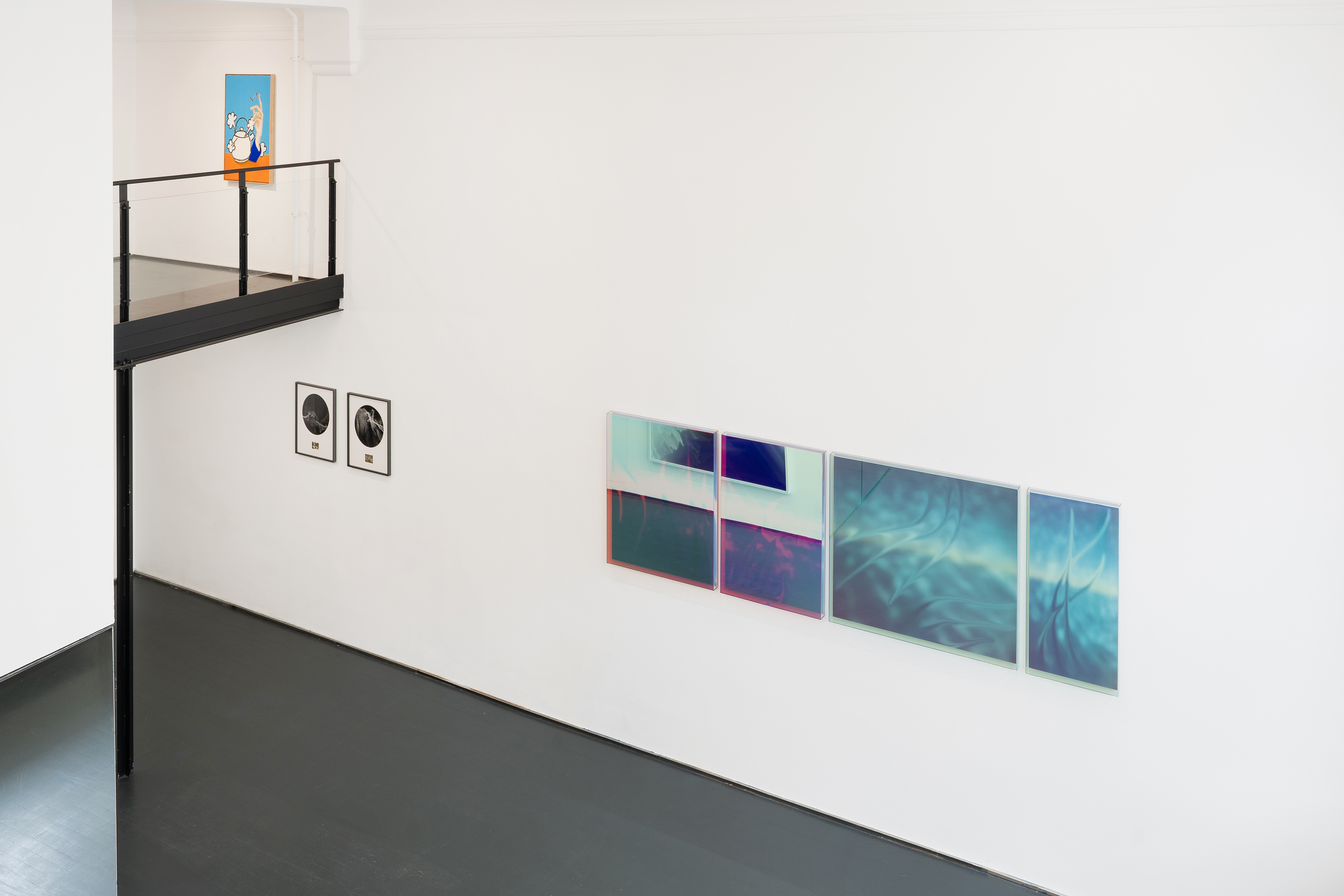
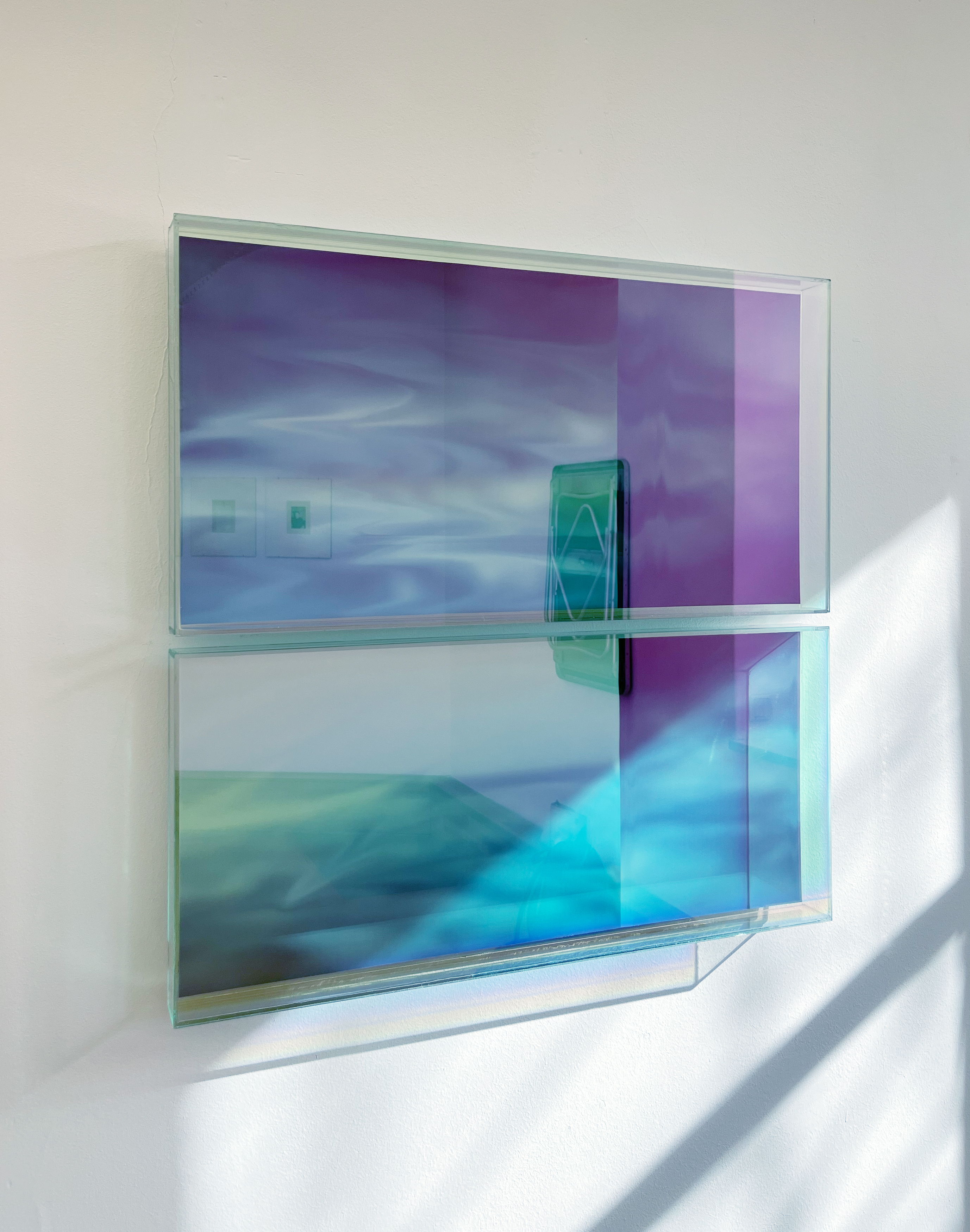
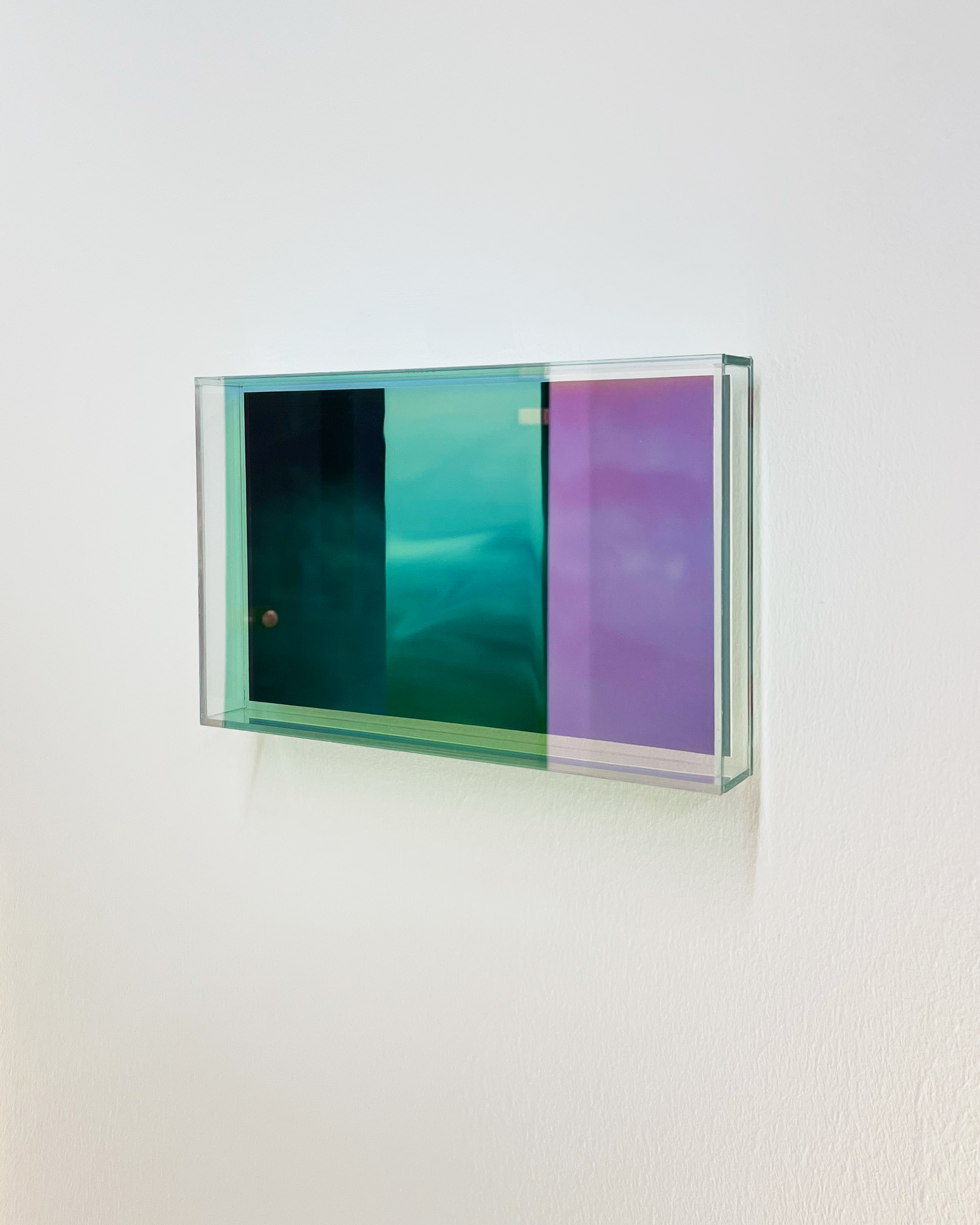
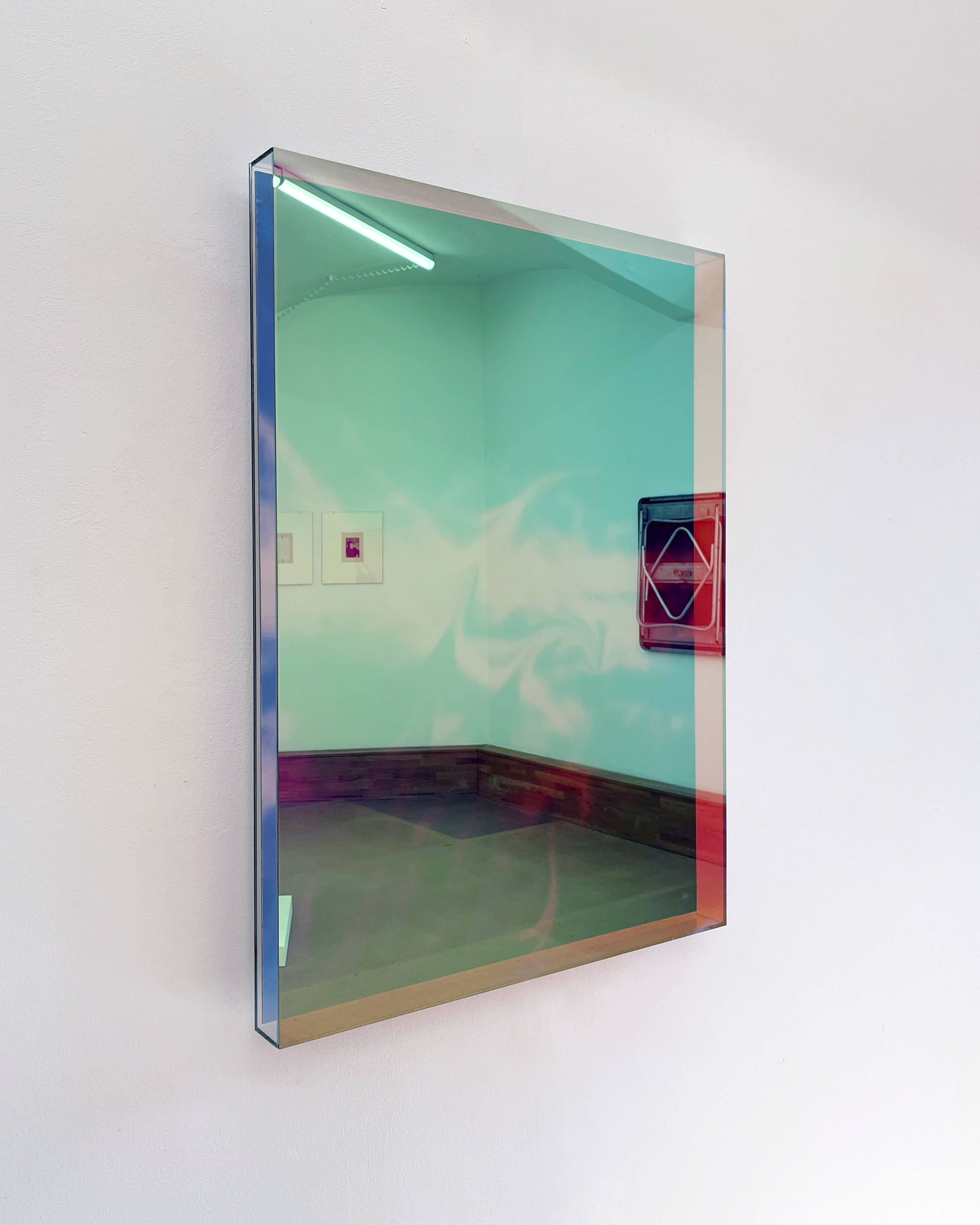
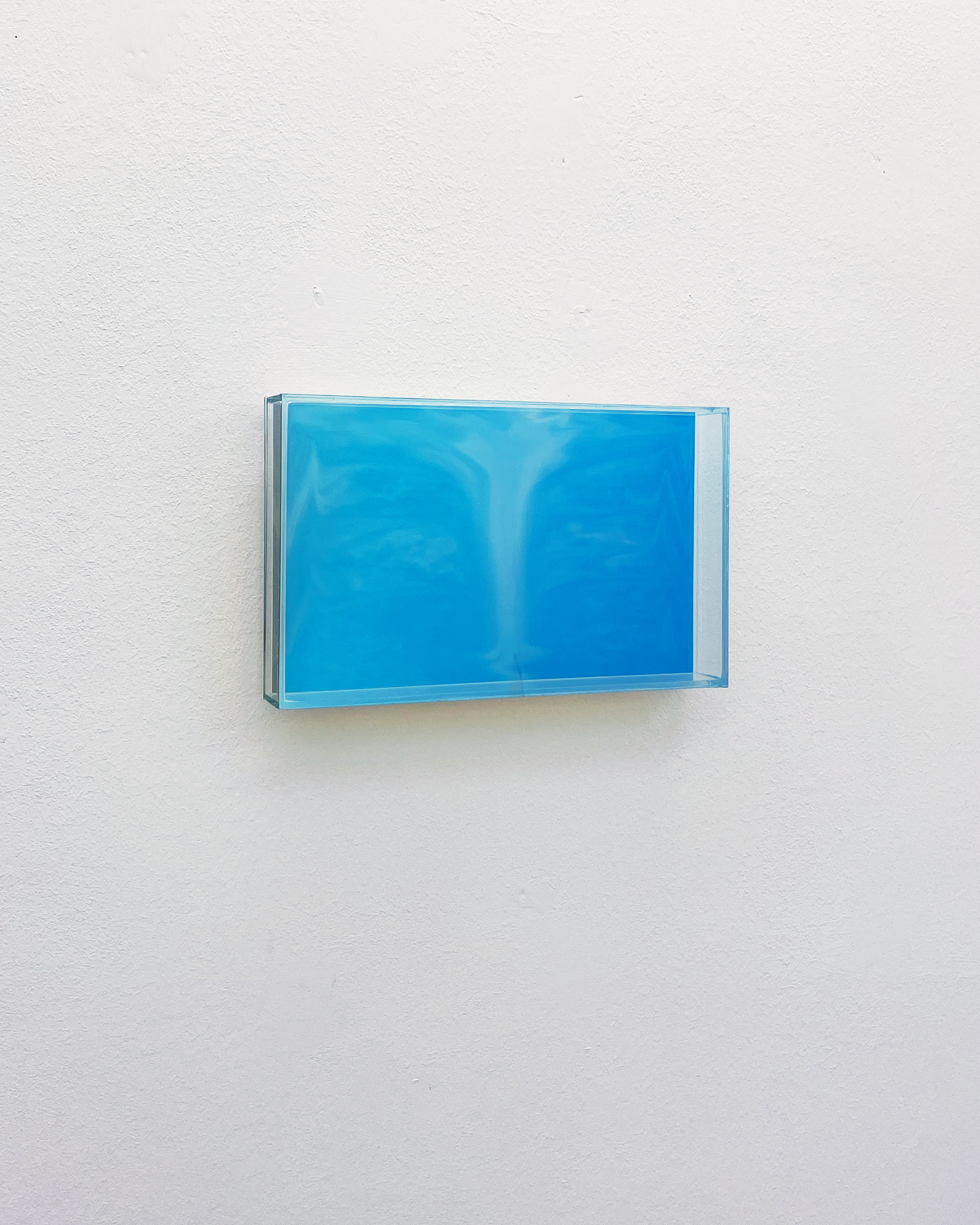
Nonplaces series, 2026, dichroic glass, digital prints on aluminum
The surreal, at times weightless visual worlds emerge from a tension between digital imagemaking, smartphone photography, and internet aesthetics. Fragmented, architecturally suggestive landscapes unfold that defy spatial localization and instead open up imaginary expanses. A central role is played by dichroic glass, whose polychromatic, reflective surface shifts colour depending on the angle of light. Fictional image spaces as digital paintings behind the glass and the real exhibition space overlap to form an object that changes with every movement of the viewer and eludes a fixed gaze. The glass surfaces function like permeable membranes—visual thresholds to a transcendent world. They open the view onto a second, poetically charged reality, in which the real and the imaginary intermingle, in which the gaze multiplies and dissolves in a floating presence. (Text: Marcus Trautner)
The Nonplaces series, comprising a total of eleven works, explores the counterconcept of utopia in a current global climate where the word ‘dystopia’ is used to excess. Translated from ancient Greek, utopia means ‘non-place’. In her works, the artist explores whether a utopia might exist not in the external world but within. She materialises her search in digital paintings based on personal smartphone photography, that intertwine with reflective glass and thereby links them to the here and now.
Exhibition view „Between Image and Space“, Behncke Gallery / „Cosmic Feel“, Art Düsseldorf 2026
Photos: Julia Milberger
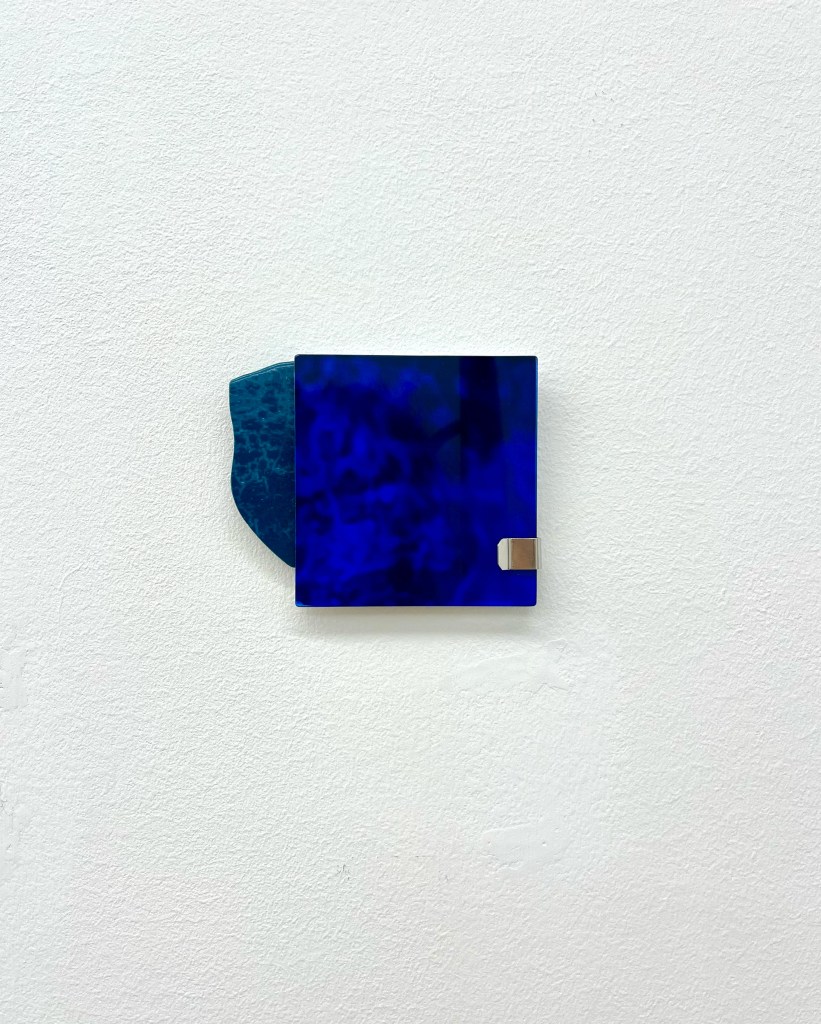
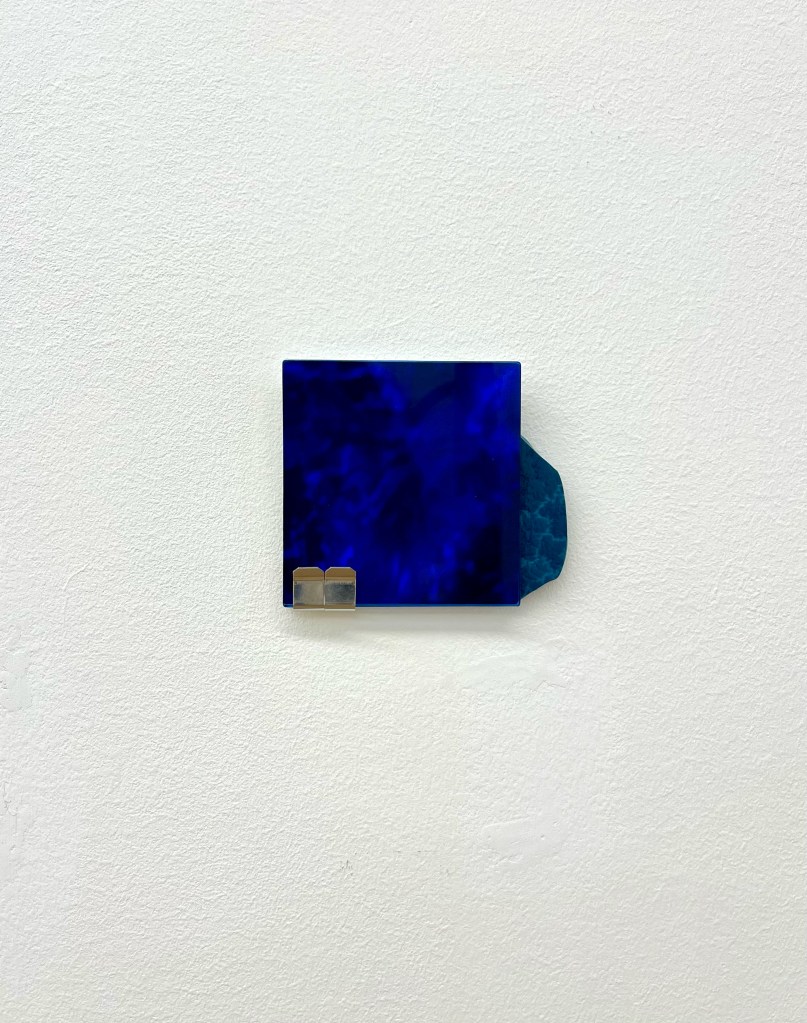
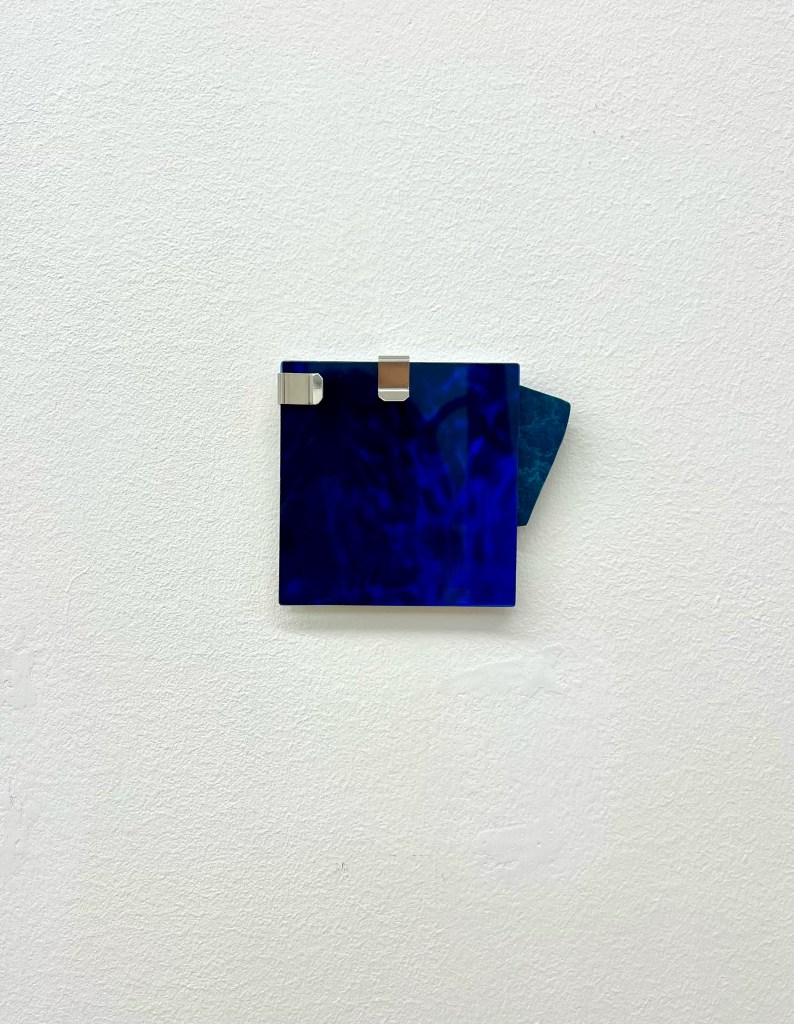
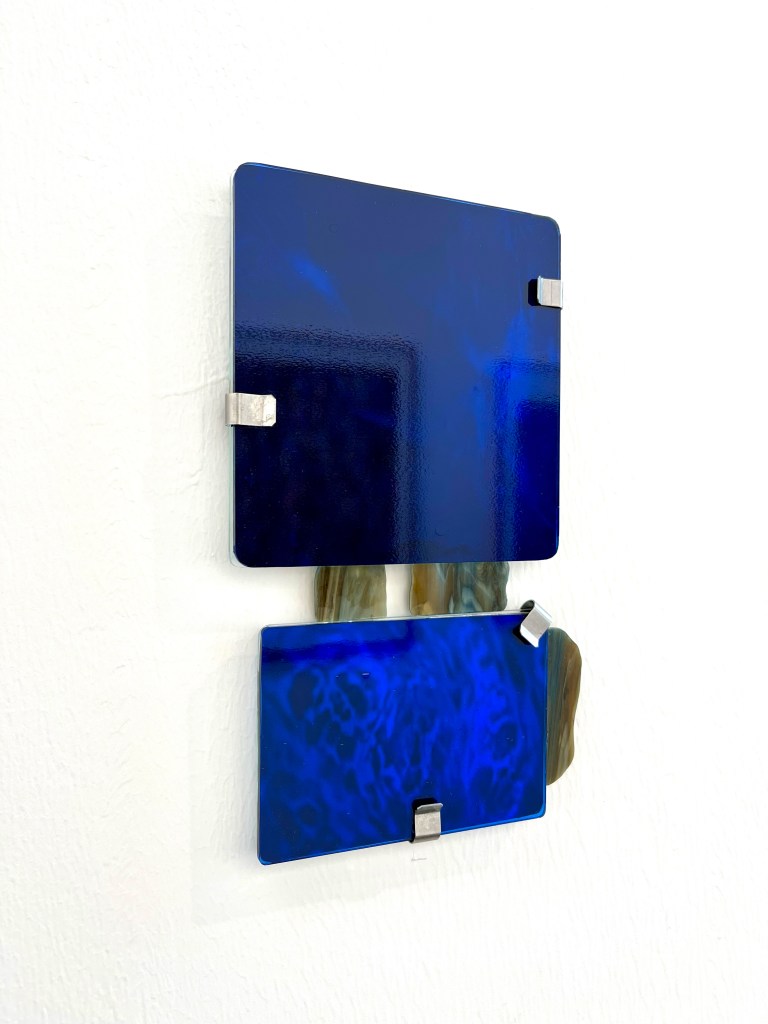
shells series, 2025/26, Oceanside glass, Bullseye glass, digital print on paper, acrylic paint, metal clips
Luisa Baldhuber creates paintings that transcend the canvas and extend into the space around them – in her work, paint becomes an architectural element. Her pieces create interstitial spaces in which imagination and reality imperceptibly merge. (Text: Maurin Dietrich)
The ‘shells’ series combines mouth-blown flat glass with digital imagery reminiscent of fragmented natural sceneries. Thereby, the canvas itself becomes an object that grows into its spatial context, bringing to life visions of mental, speculative future landscapes. The ‘shells’ appear as threshold entities, straddling the boundaries between the organic and the industrial, the analogue and the digital, technology and sensuality.
Exhibition view „Jahresgaben“, Kunstverein München, 2025 / „Cosmic Feel“, Art Düsseldorf 2026
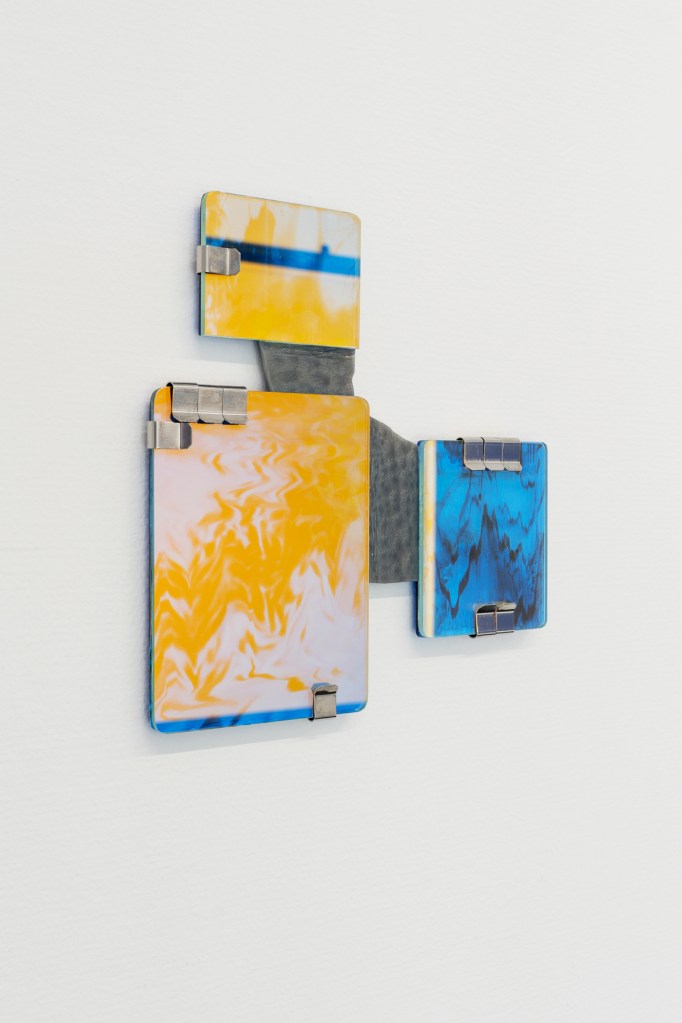
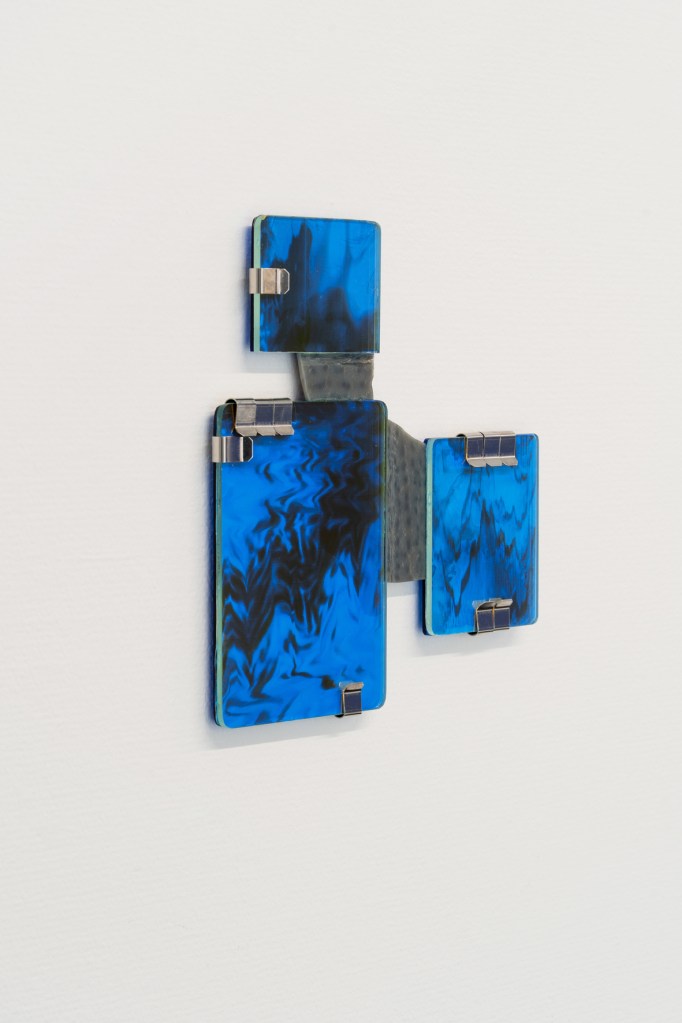

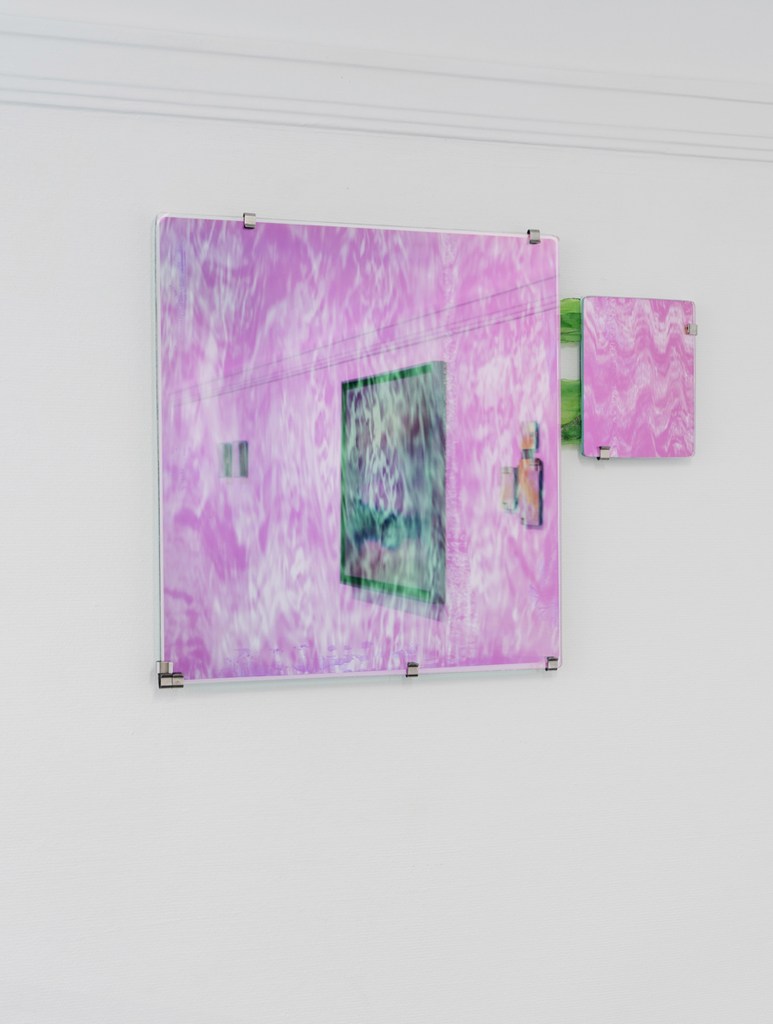


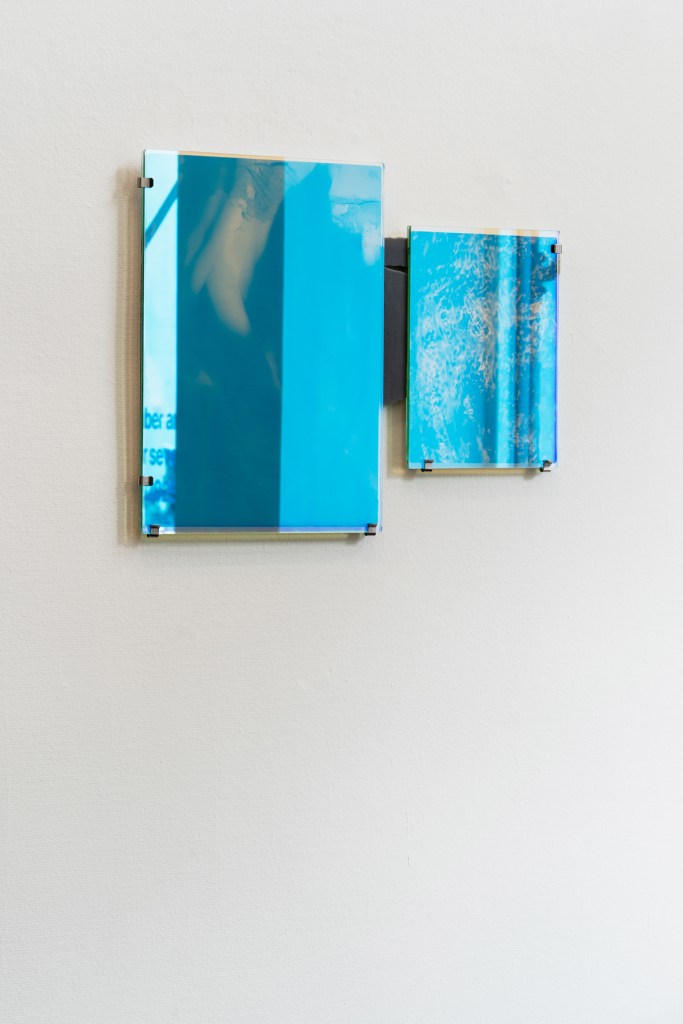
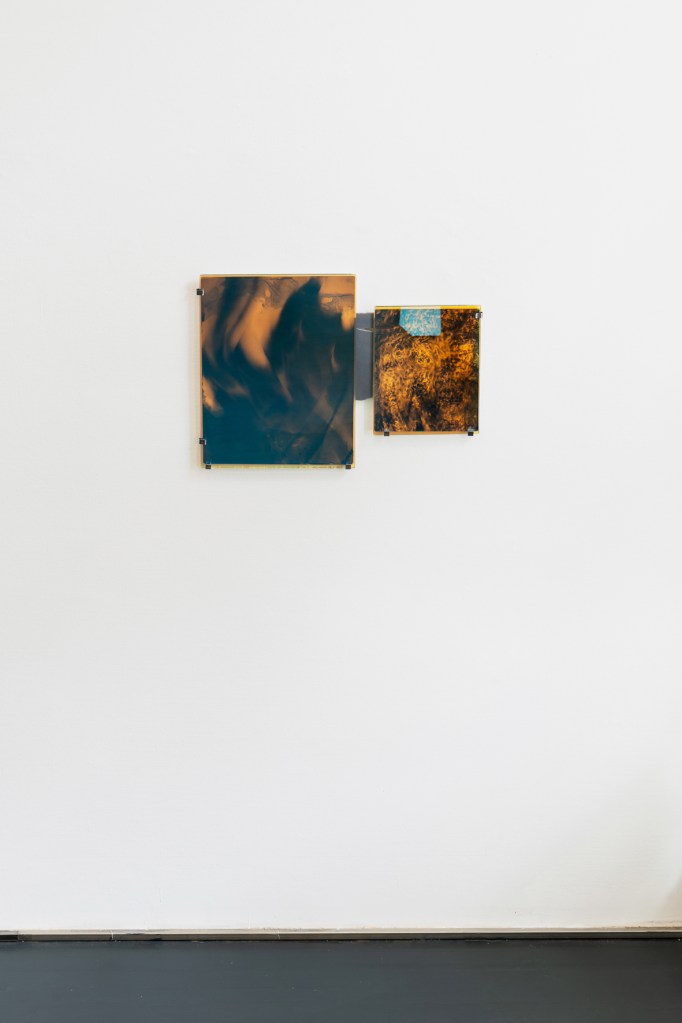
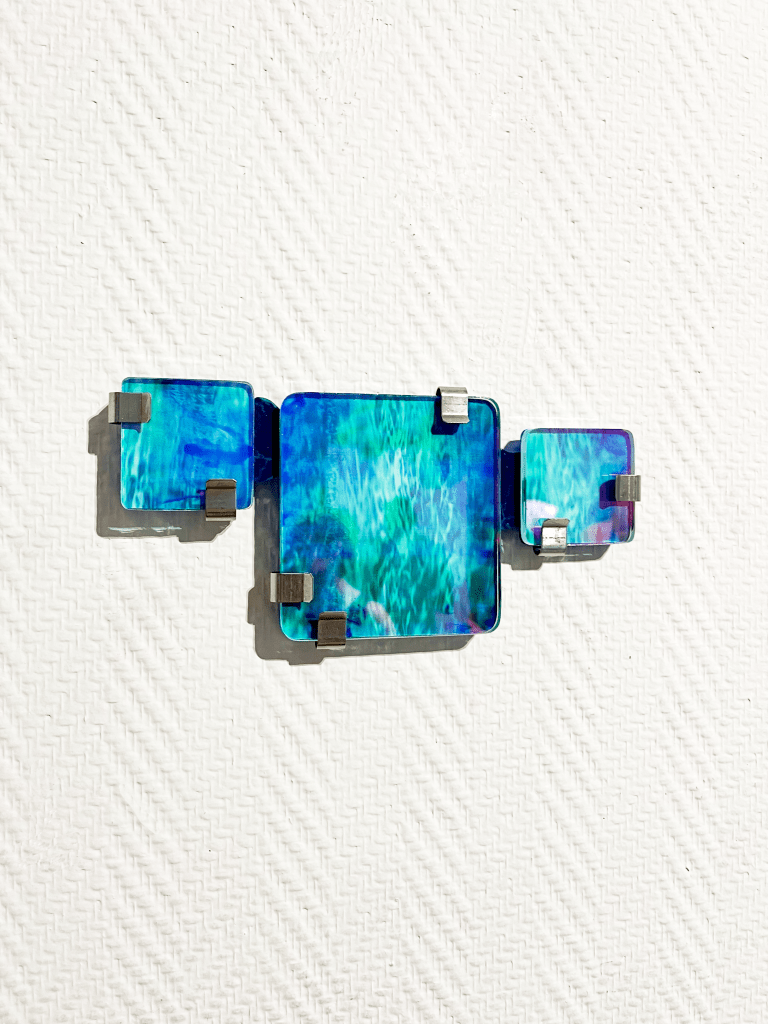

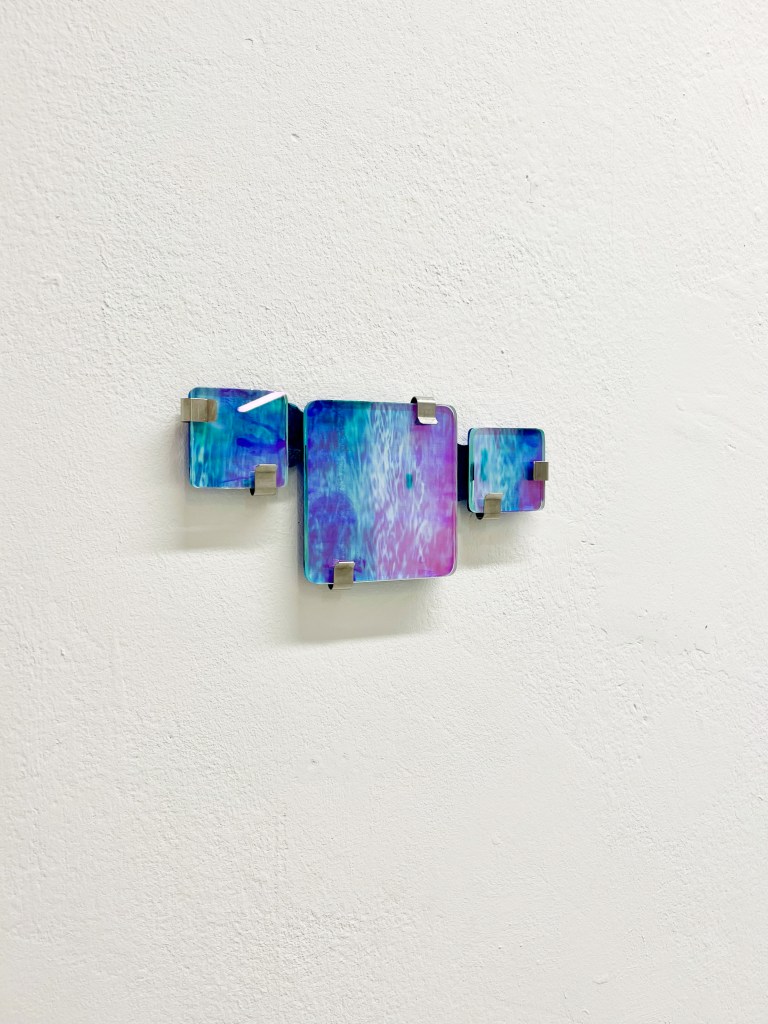
Archaeologies series, 2025, dichoirc glass, digital prints on paper, acrylic paint, metal clips
The delicate glass works of the series Archaeologies operate in the field of tension between light, form, space, and their perception. Starting from classical painting, Baldhuber has developed reduced image carriers in which reflective glass, digital landscape images, and spatial extensions come together. The motifs of these multi-layered architectures of perception oscillate between fiction and reality. The combination of analog light incidence and digitally processed natural motifs creates an atmosphere that remains as dreamlike as it is analytical, a visual field in which the unconscious, the associative, and psychoanalytical ciphers resonate. Her expanded image carriers unfold a strong luminosity, opening up perspectives in which light as a medium both constructs, dissolves, and transforms spaces. (Text: Quirin Brunnmeier)
Exhibition view “No Talking For Seven Days”, Behncke Gallery / „Kyoto Morph und die vier Füße des Benjamin“, Kunstarkaden Munich
Photos: Julia Milberger


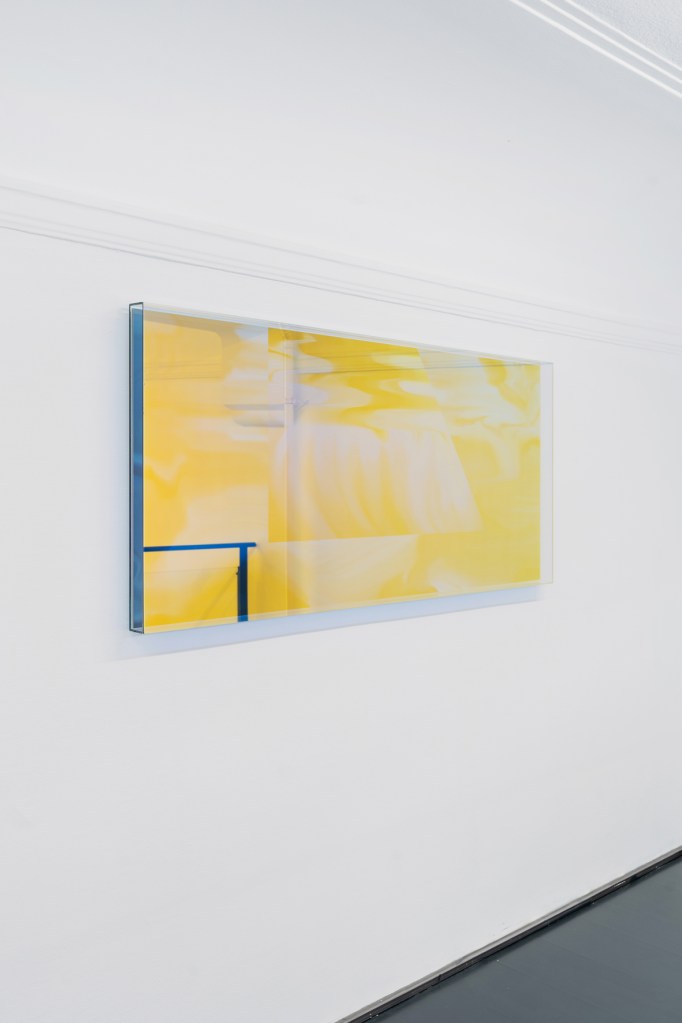

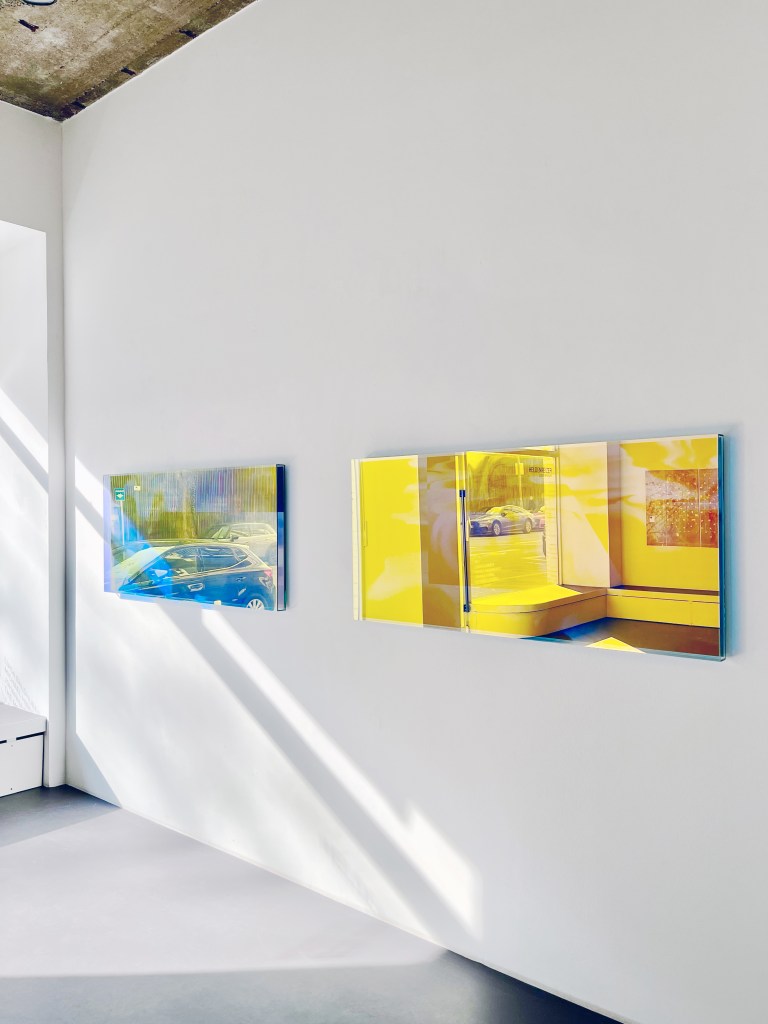
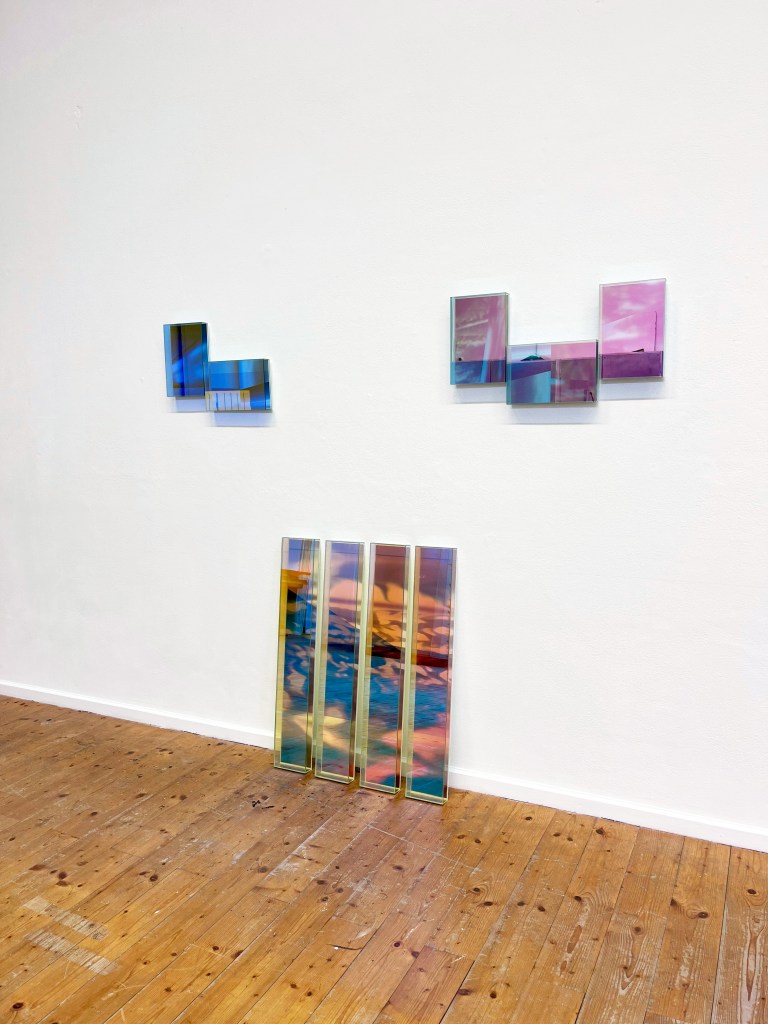
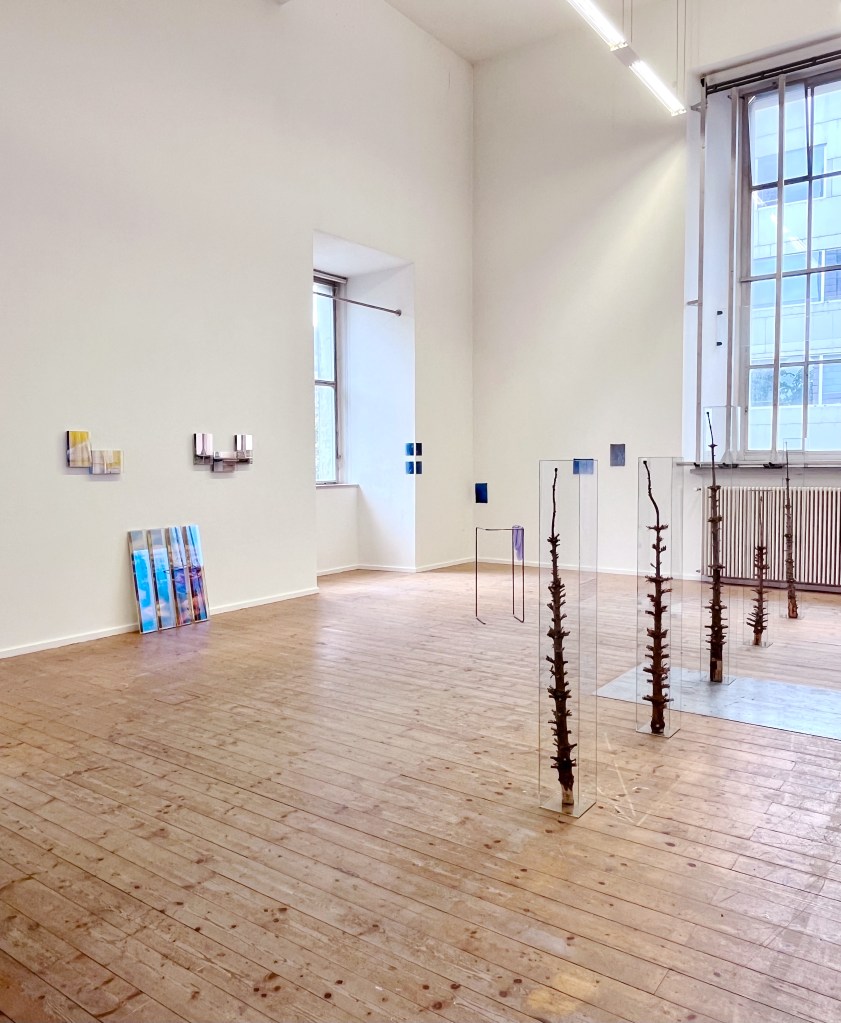


Coordinates series, 2023 – 2025, dichroic glass, digital prints on aluminum
In the series “Coordinates”, Baldhuber’s works remain connected to the real world despite the seemingly detached aesthetic of her digital paintings behind glass. She titles her works with geographic coordinates—such as 44°29’02.1″N 161°08’19.6″W (2024)—referencing concrete places. This apparent localization contrasts with the visual indeterminacy of the digital imagery but lends the works a quiet anchoring in the global and draws attention to the tension between virtual construction, mental landscapes and the physical world. (Text: Marcus Trautner)
Exhibition views “No Talking For Seven Days”, Behncke Gallery 2025 / „The Moon Is No Door“, Heldenreizer Contemporary 2025, Annual exhibition Academy of Fine Arts 2023
installations
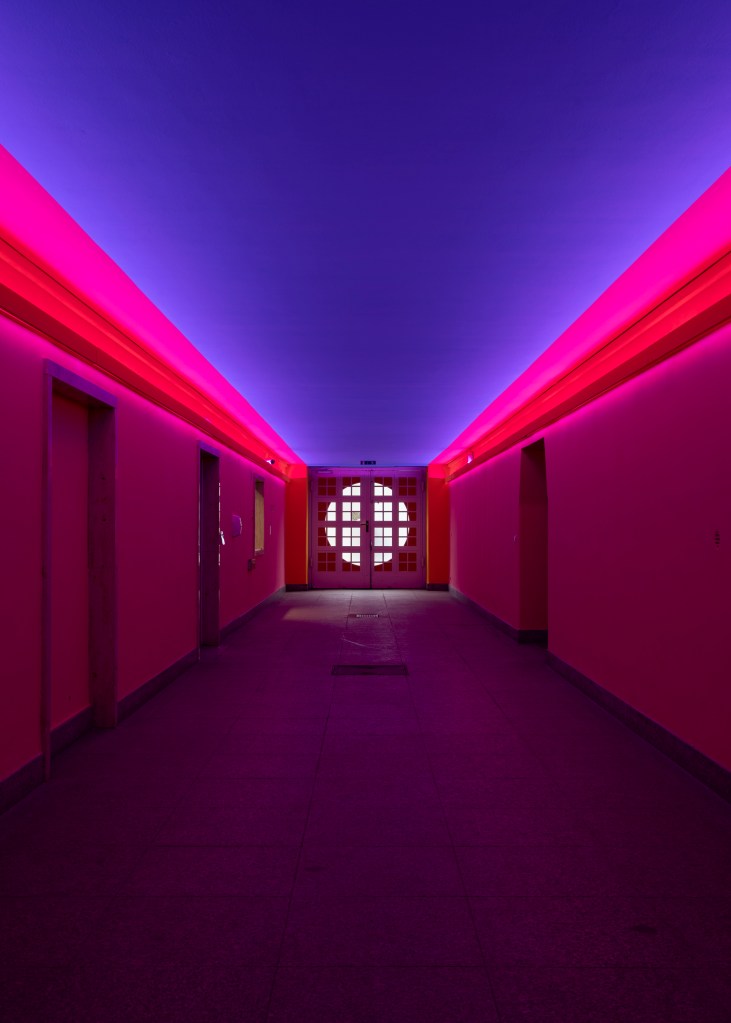

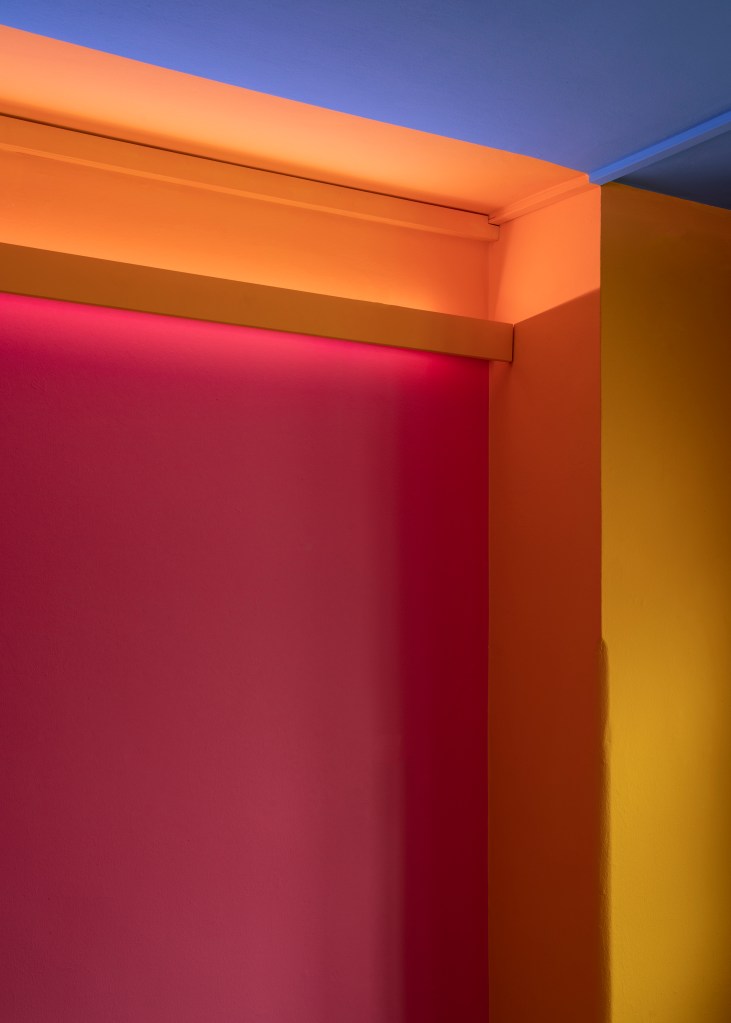
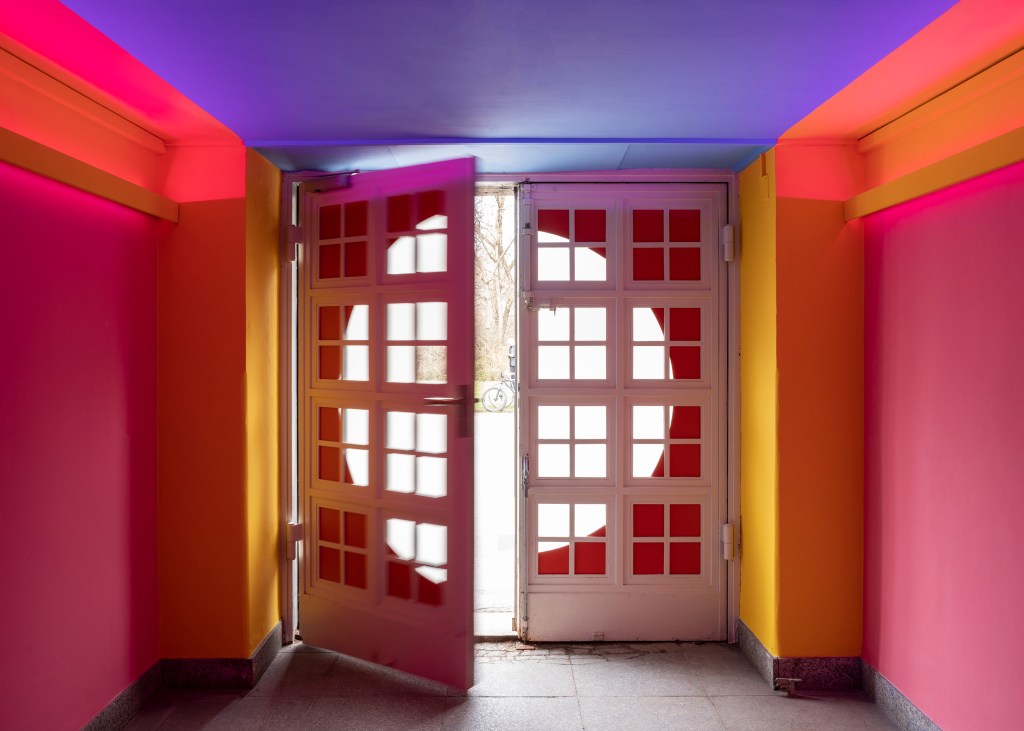


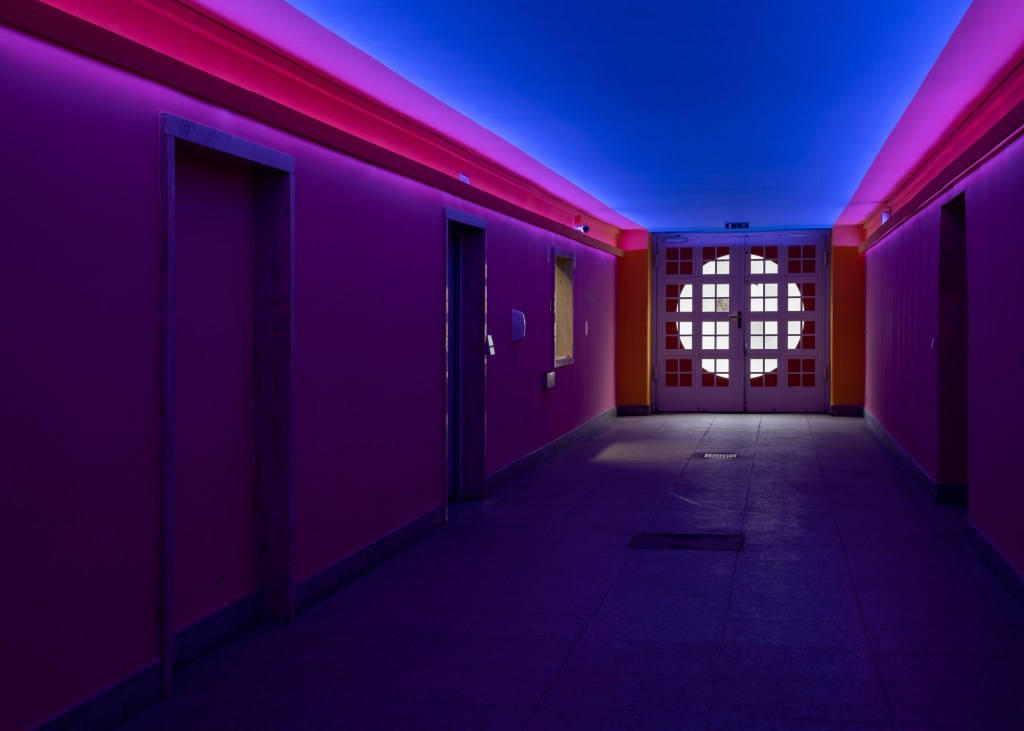


Afterglow, Haus der Kunst Munich, 2024 – 2025, wall paint, led rgb light
Afterglow envelops us in the colours of a perpetually repeating sunrise and sunset. The multi-sensory, site-specific installation by artist Luisa Baldhuber enables a form of embodied experience, which unfolds over the duration of the viewing. The shifting colours of the artificial light affect the appearance of the painterly composition on the walls, creating a dynamic landscape. The colour planes suggest an optical expansion of the space, reminiscent of a landscape, horizon or sky. Through the changing, atmospheric colour moods created by the interplay of light and wall colours, the abstract skyscape calls to mind moments in nature and allows us to dream for a moment.
The title’s reference to memory adds another layer to the relationship between light, painting and time. Inspired by the Light and Space Movement of 1960s California, Baldhuber explores the sensory and emotional impact of light through minimalist means.
With Afterglow, she also reflects on the design principles of the nearby English Garden, translating its idea of idealised nature into the liminal space of the Haus der Kunst staff entrance. The installation stages a dialogue between nature, architecture and perception, questioning the boundaries between inside and outside.
By merging illusion, paint and light, Baldhuber not only alters spatial experience but also heightens awareness of how we perceive and interpret the visible world. The recurring image of sunrise and sunset becomes a poetic metaphor for transformation and reflection. (Text: Haus der Kunst)
Exhibition view Haus der Kunst Munich, 2024 – 2025
Photos: Maximilian Geuter
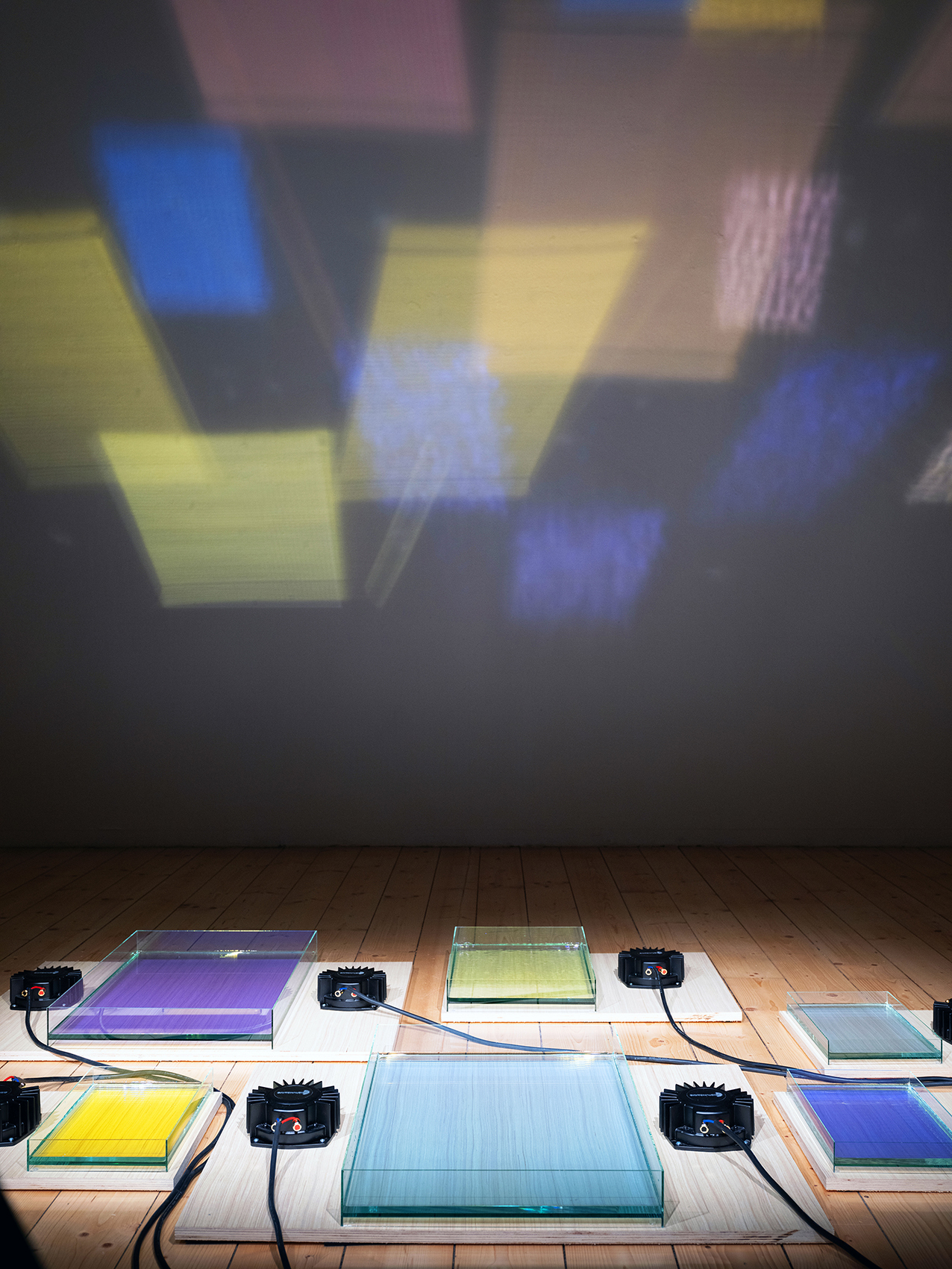


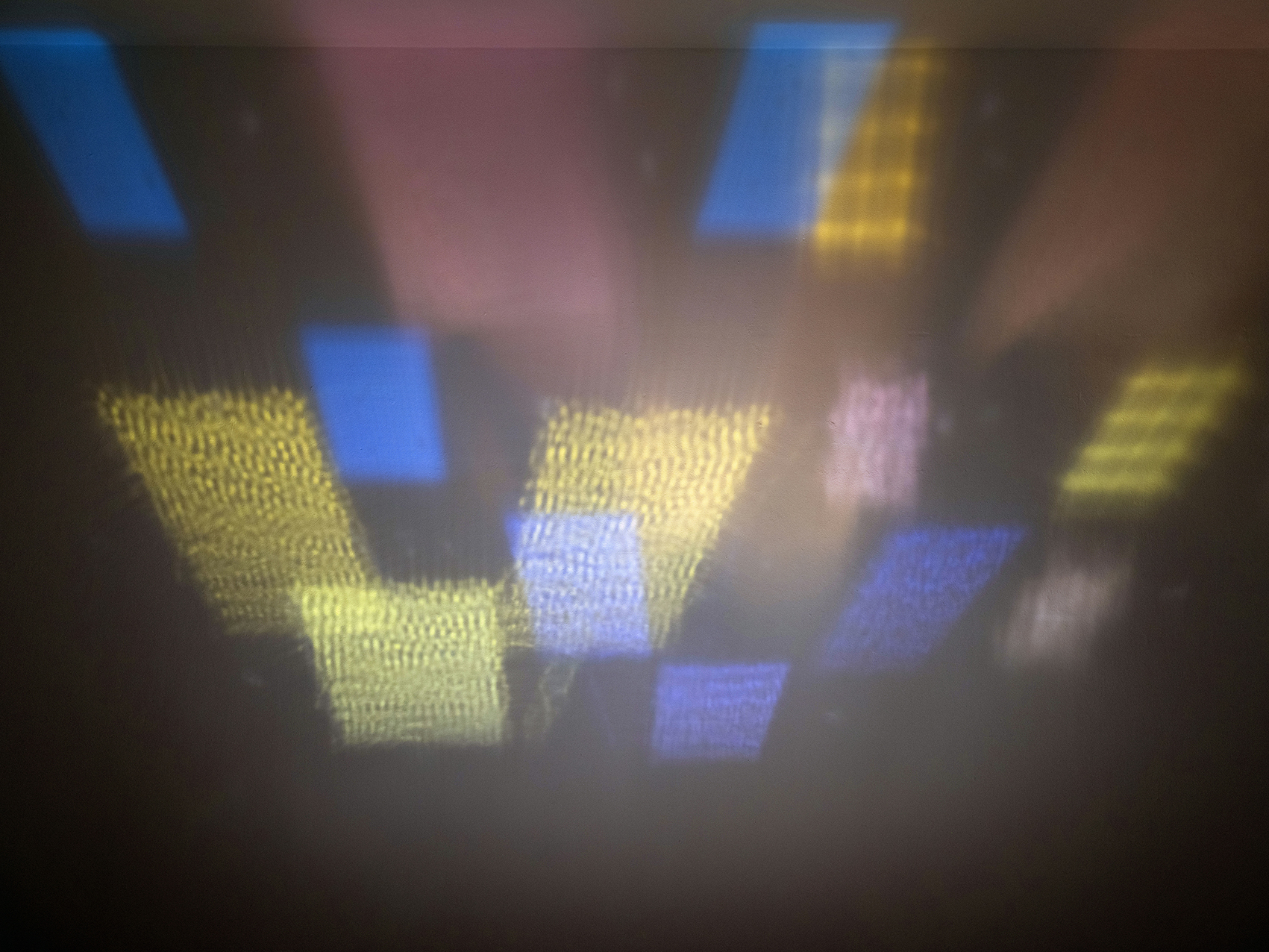

Oscillating, 2025, dichroic glass, water, sound, light,
Oscillating is a multi-sensory installation that combines sound, light and movement. A central aspect is the artistic transformation of a self-composed sound piece into a light painting and enables the fleeting beauty of the Chladni sound figures and light reflections to be experienced as a flowing, ever-changing natural phenomenon.
Water influenced by acoustic vibrations creates graphic patterns on the surface, known as the Chladni Figures. These dynamic, mandala-like shapes reflect the invisible forces of nature and the interaction between sound and water.
The reflective surfaces of the glass function as membranes and visual thresholds.
Dichroic glass boxes amplify the vibrations and translate them into flowing movements, while light projections transform the surface of the water into a living painting. The reflections of the dichroic glass projected onto the wall create the complementary color of the respective box, integrating painterly elements to the work.
Oscillating invites to listen with our eyes and see with our ears, until sound, light and water merge into a single, breathing rhythm, like the quiet pulse of the world made visible for an instant.
The installation was presented as Luisa Baldhuber’s graduation work for her Diploma in Fine Arts at the Academy of Fine Arts Munich.
Exhibition view Academy of Fine Arts Munich, 2025
Photo: Faruk Inanmis


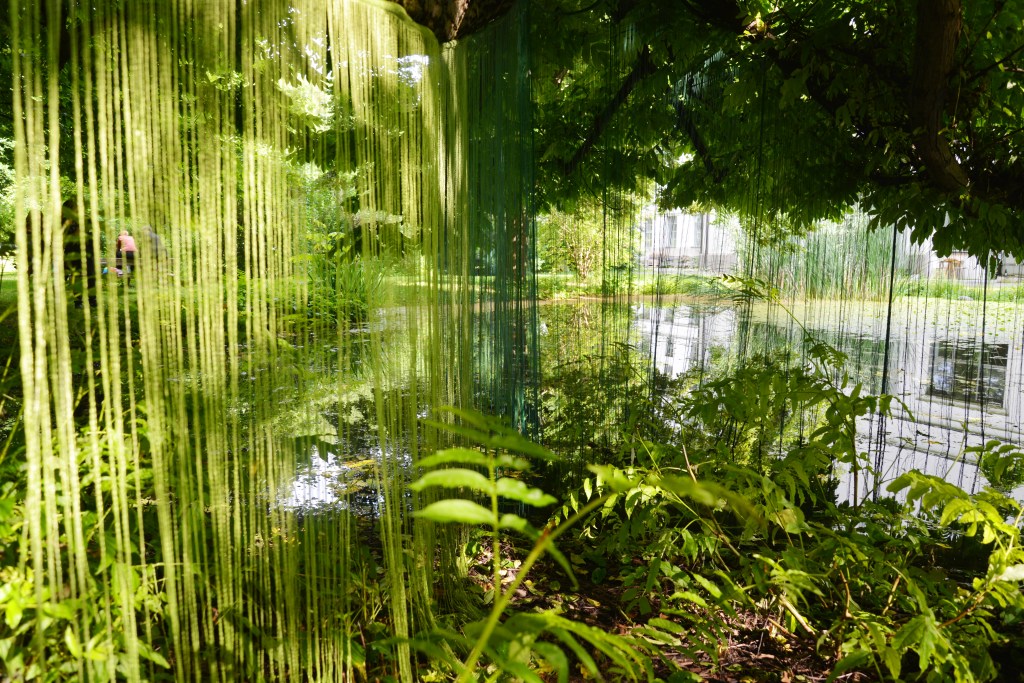
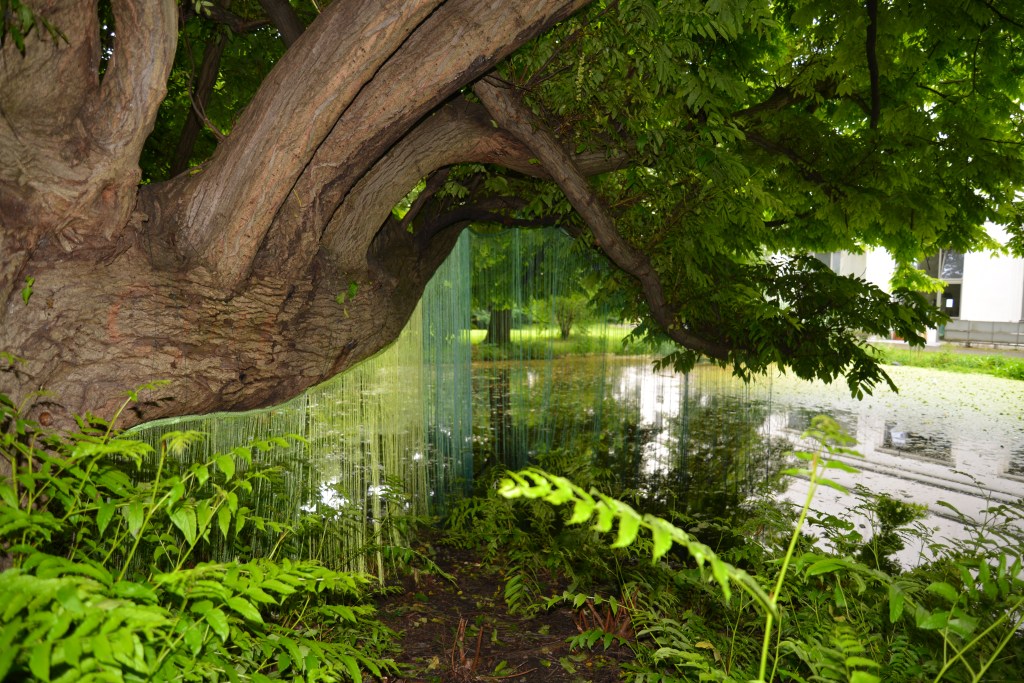
Untitled, 2021, polyester thread curtains, textile color
Industrially produced thread curtains are transformed through the act of hand-dyeing into a singular, site-specific work. The intervention of color reveals the material’s potential as both a painterly medium and a spatial element. Through the linear presence of the threads, the curtains inscribe themselves into the environment like drawn lines, merging gesture and architecture.
The overlapping of colored cords and spatial context generates a space of chromatic interactions, constantly shifting with the movement of the material, the changing light, and the viewer’s position. The chosen hues respond to the colors of the surrounding space, oscillating between visibility and disappearance.
Despite the subtlety of their material presence, the curtains articulate a distinct sense of space. They function as permeable membranes and spatial thresholds, delineating boundaries not through solidity but through transparency. In doing so, they create transitional states that simultaneously separate and connect, shaping a mental landscape defined as much by what passes through as by what remains.
Installation view, annual exhibition Academy of Fine Arts Munich, 2021


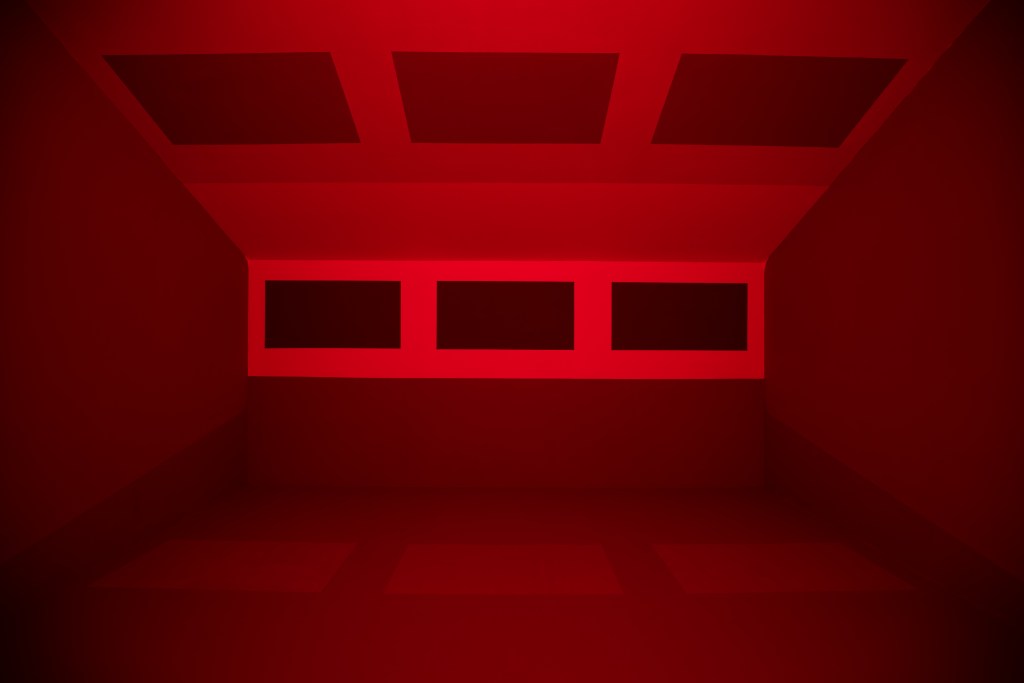
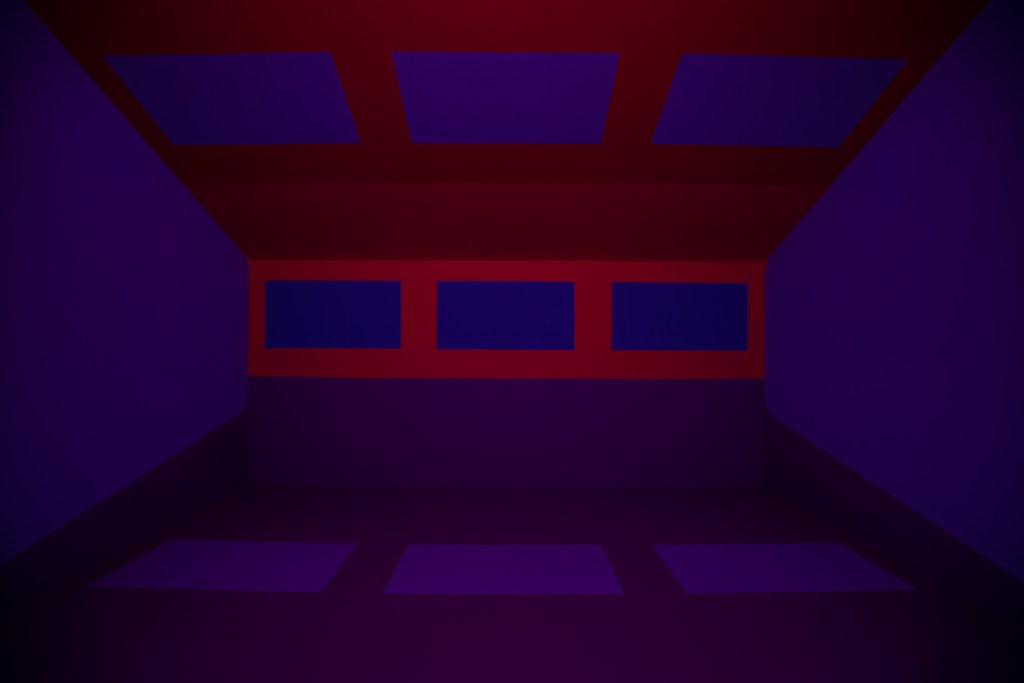

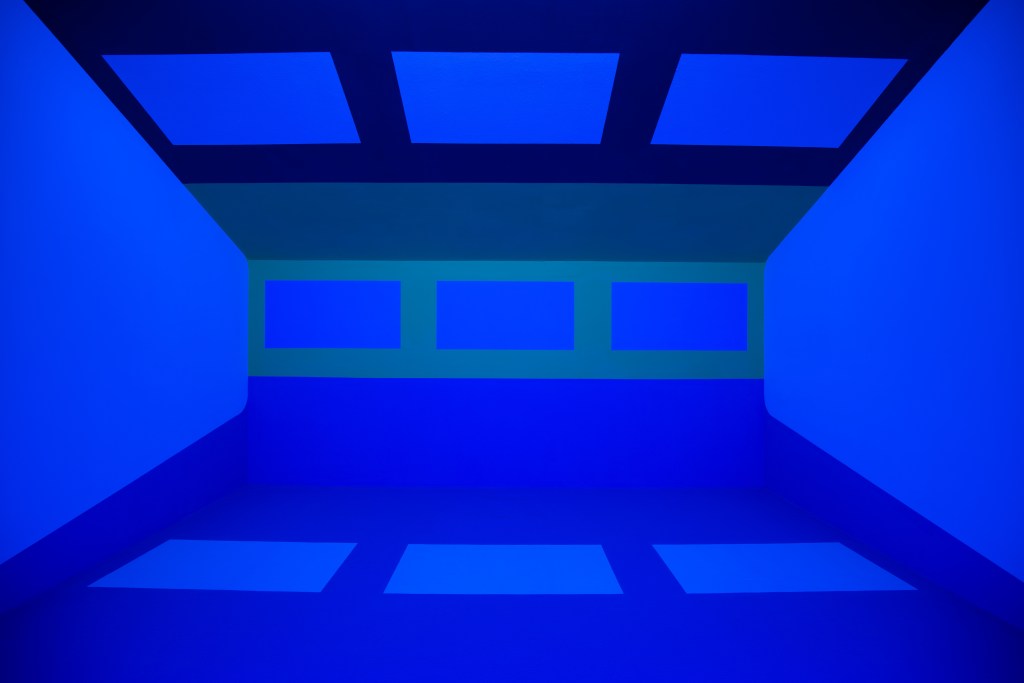

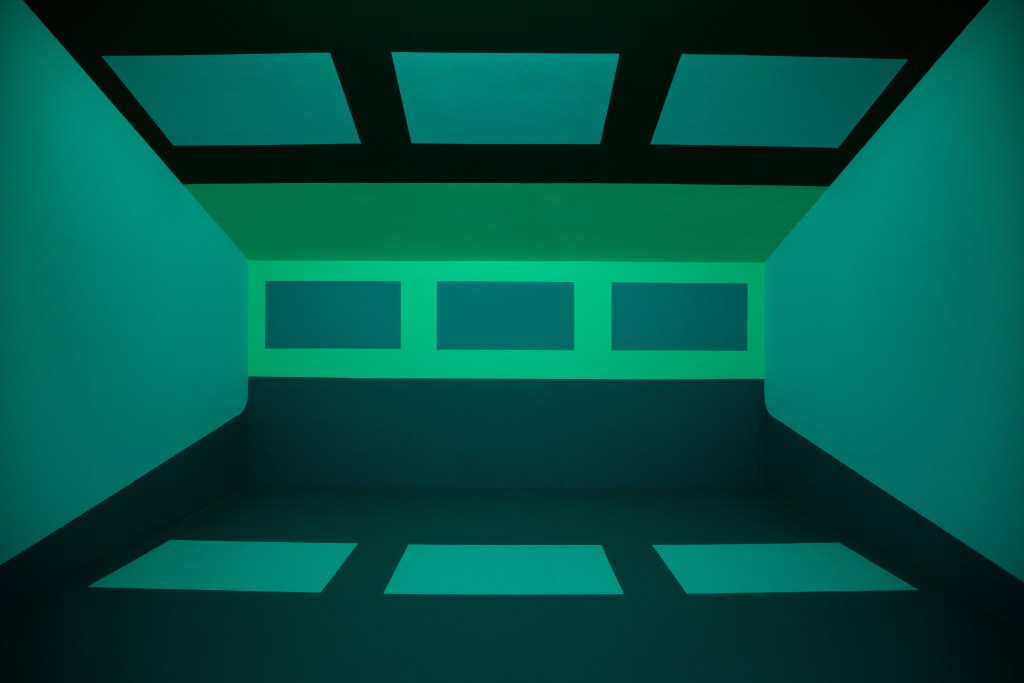

Untitled, 2021, wall paint, led rgb light
In this site-specific installation, Luisa Baldhuber expands mural painting into an exploration of space, colour, and perception. Colour becomes an active force that reshapes architectural structures and draws them into a painterly dialogue. Windows, doors, and openings are not treated as interruptions but are absorbed into the composition, transforming architecture into a dynamic image space.
Responding directly to the existing site, Baldhuber reconfigures architectural lines, edges, and proportions into new painterly constellations. Through this process, space unfolds as a transitional state between the real and the imagined. Painted surfaces generate new depths and visual projections that blur spatial boundaries and invite viewers to reconsider what lies beyond the visible.
RGB light plays a central role in this transformation. Continuously shifting through a spectrum of hues, it activates the painted surfaces and alters the perception of space. Walls oscillate between two- and three-dimensionality, while colour and light function as permeable thresholds between architecture and illusion. The installation creates a fluid mental landscape that changes with movement, perception, and time.
The work was presented as part of the graduation exhibition in Art Education at the Academy of Fine Arts Munich in 2021. The artist was awarded the Debutant Prize for outstanding artistic achievement.
Installation view, Academy of Fine Arts Munich, 2021
Photo: Vincent Entekhabi

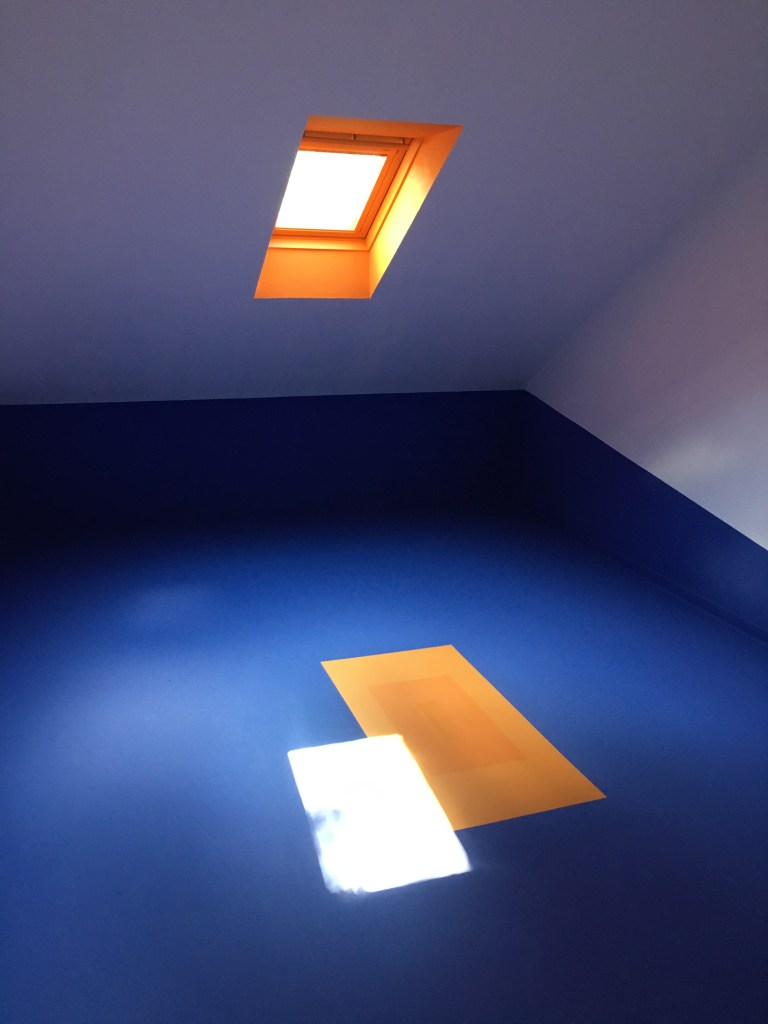

Untitled, 2020, wall paint, sunlight
Exhibition view „Wennfeldhaus“, Artist Residency Tuebingen, 2020
 Luisa Baldhuber